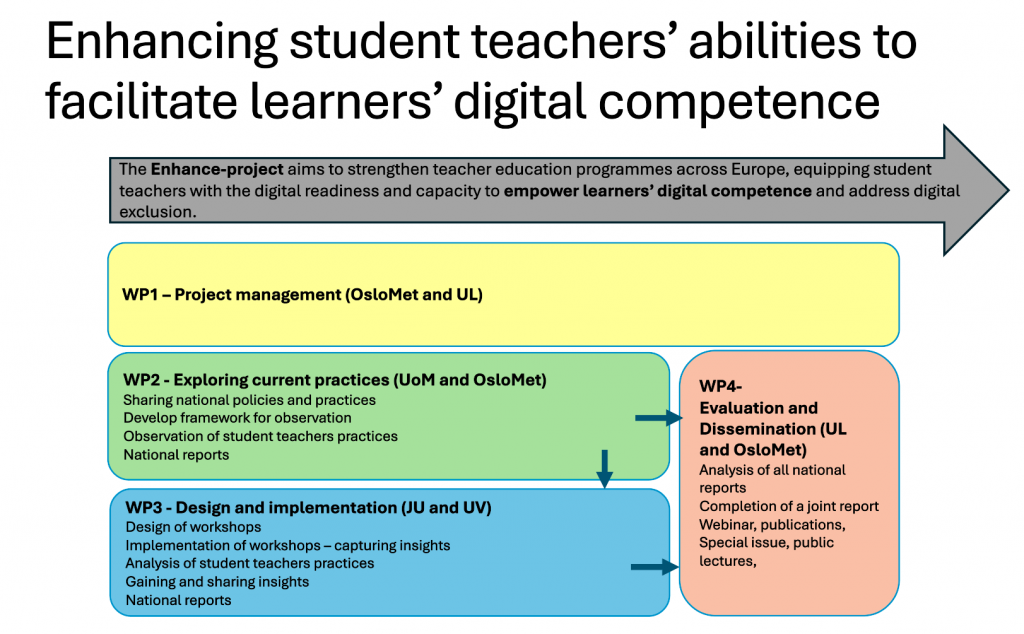
We have now completed Work Package 2 of the project. One of the key outcomes is a set of five research reports that describe and discuss student teachers’ school placement experiences and the role of digital technologies in practice in Ireland, Malta, Norway, Poland and Spain. Taken together, the reports provide a unique comparative perspective on how student teachers encounter digital technologies during school placement across Europe. The findings will inform the next stages of the project and contribute to ongoing discussions about the role of digital competence in teacher education.
The reports are now publicly available and can be downloaded online from Zenodo.
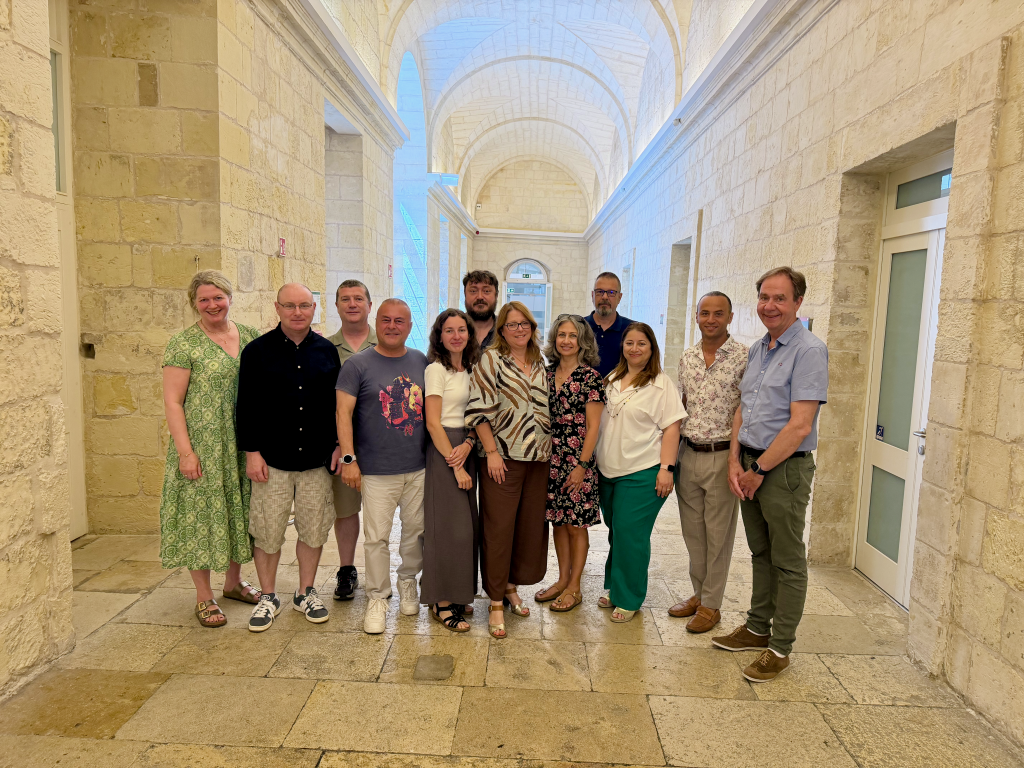
A recent Erasmus+ visit to the beautiful Island of Malta, the city of Valetta and the amazing city campus of the University of Malta, where partners from the 5 participating countries gathered to work on a funded project looking at how student teachers can impart digital competency skills on their pupils.
Day one began with a meeting where the large data set that each country had gathered for Work Package 2 (WP2) were shared amongst all partners. Each partner provided a detailed presentation, where they provided all members with details of the outcomes from their respective countries and each presentation was followed by a sharing of views and information. A key outcome was the lack of conformity within teacher education in the different countries. Another outcome was that irregardless of the level of digital equipment available to student teachers, the student teachers didn’t see it as part of their role to advance their pupils digital competence.
Day two advanced the details for Work Package 3 (WP3). Initial discussions were very fruitful in identifying the key areas that student perhaps lack a level of personal digital competence and more importantly, ownership, of their role to impart critical digital competency to their pupils in the classroom. Identifying missed opportunities where the student teacher didn’t realise they could have seamlessly introduced areas of digital competence into their lessons and helping the student teacher identify those missed opportunities.
Lastly Day 3, the partners all agreed dates for visiting two of our other Erasmus partners in Krakow and Valencia. Discussed dissemination of the project findings and also data management and storage. Partners also reaffirmed their agreement to align with the publication agreement drafted in Oslo in the first meeting.
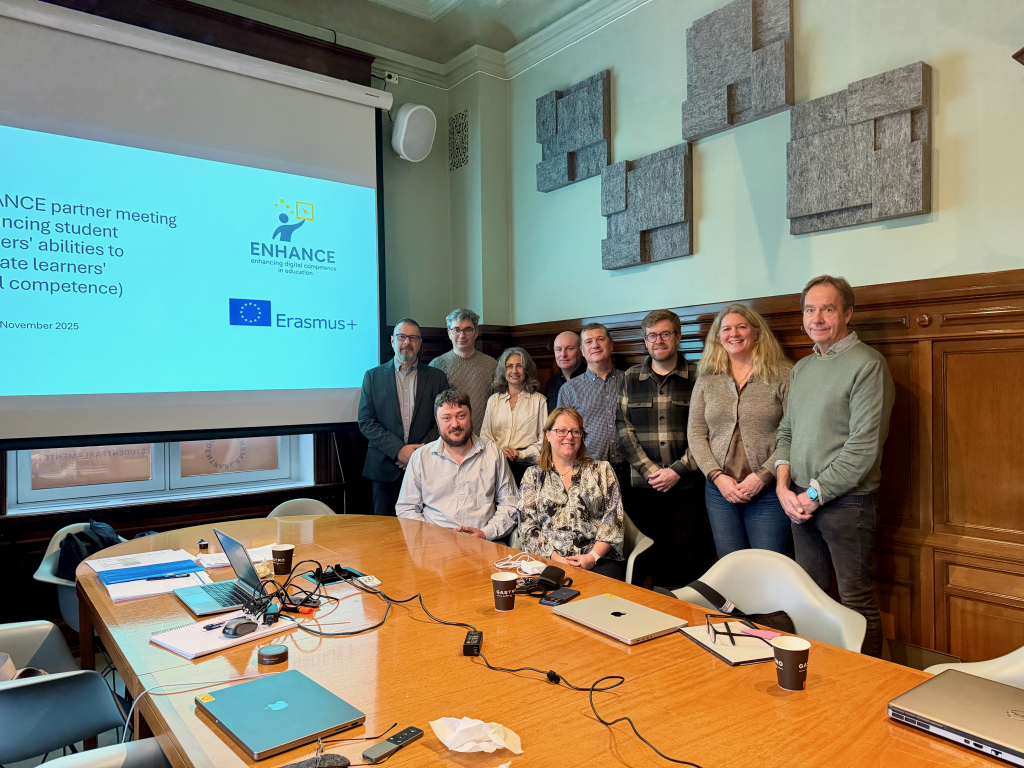
We have just concluded a highly successful gathering at OsloMet. As the phrase goes, a good start is half the battle. After sharing experiences related to teaching practice, it has become even clearer to us that practicum teaching is evidently a blind spot when it comes to developing student teachers’ ability to teach pupils digital competencies. We look forward to continued collaboration on this important topic.
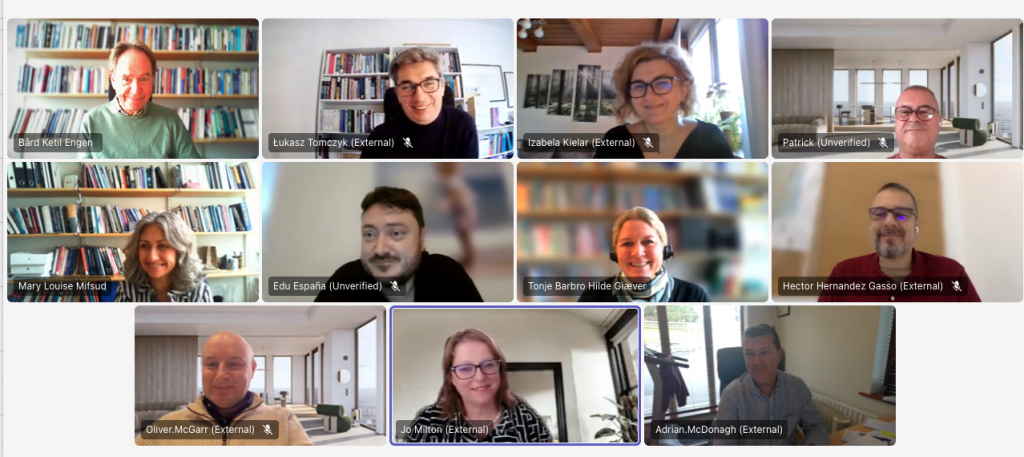
The project group held a successful online kickoff. We look forward to three years of collaboration on such an important topic. In three weeks, we will gather in Oslo to continue with Work Package 2 of the project. Many thanks to all participants for valuable contributions and engagement.
From top left: Bård Ketil Engen, OsloMet. Łukasz Tomczyk, Jagiellonian University in Kraków. Izabela Kielar, Jagiellonian University in Kraków. Patrick Camelleri, University of Malta, Louise Mifsud, OsloMet. Eduardo España, University of Valencia. Tonje Hilde Giæver, OsloMet. Héctor Hernández Gassó, University of Valencia. Oliver McGarr, University of Limerick, Josephine Milton, University of Malta. Adrian McDonagh, University of Limerick.A snapshot of the Enhance project